
Comprehensive Vision Care
Glaucoma care starts with regular check-ups.
Glaucoma often has no early symptoms. Examination and long-term follow-up are how it is found and kept under watch.

Comprehensive Vision Care
What is glaucoma?
Glaucoma is a group of eye conditions in which the optic nerve, which carries what the eye sees to the brain, is gradually damaged. Raised pressure inside the eye is a common factor, but it is not the only one.
Glaucoma is often called the silent thief of sight because it can take side vision slowly and without pain. Left untreated, it can lead to permanent loss of vision.
Glaucoma is usually a long-term condition that is managed rather than cured. Damage to the optic nerve cannot be reversed, so the aim of care is to find glaucoma early and to protect the vision that remains. Treatment and follow-up are planned for each person.
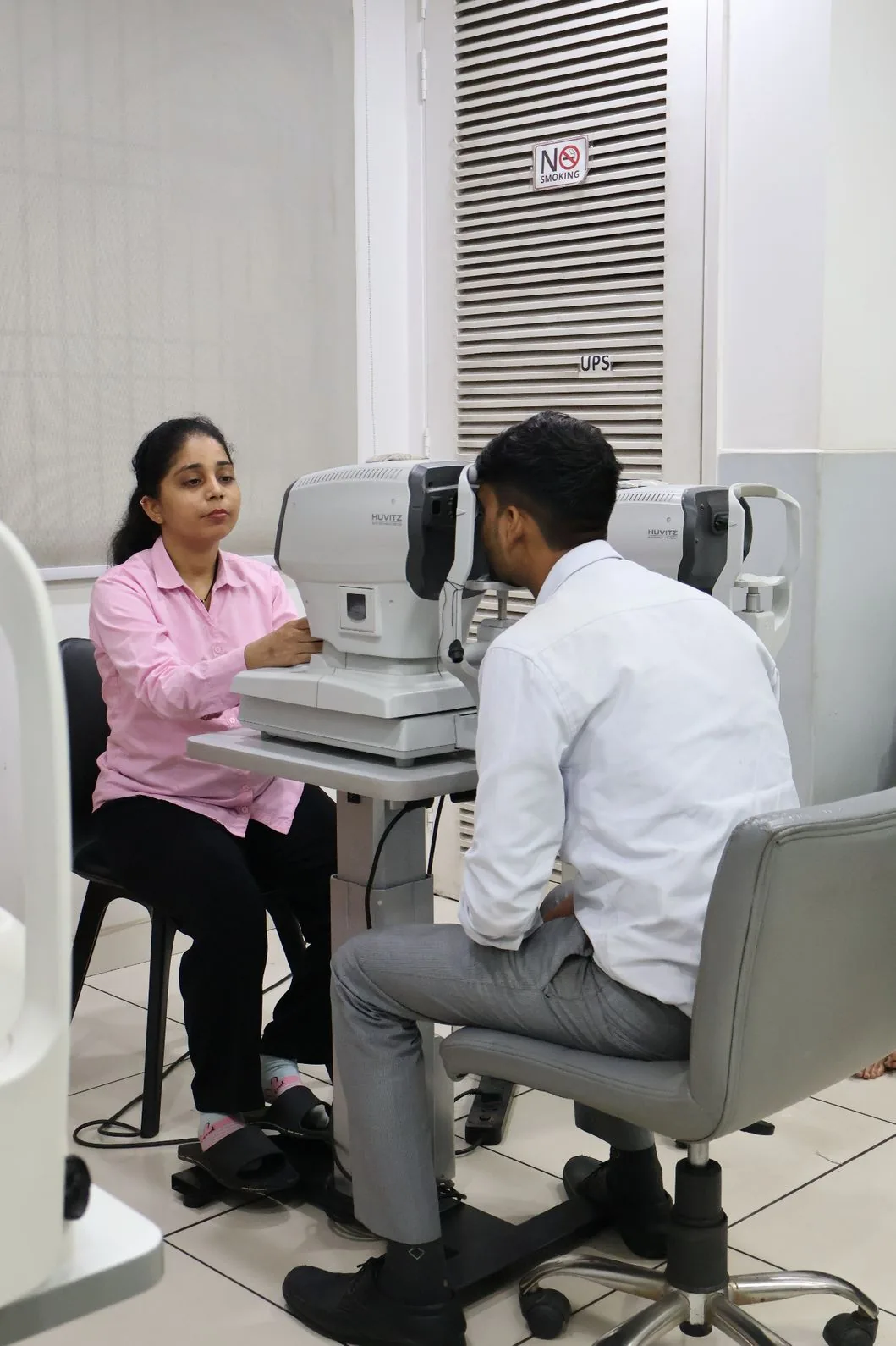
Why check-ups matter
Often no early symptoms. That is why an examination matters.
Vision lost to glaucoma does not come back, and early on most people notice nothing. Regular examination is how it is found, and how any change is caught.
Signs to notice
Changes you may notice
Early glaucoma often shows nothing at all. When changes do appear, they tend to be slow, so they are easy to put down to age or tired eyes.
Changing glasses often
Needing a new prescription again and again can be a sign worth mentioning to the doctor.
Narrowing side vision
Side (peripheral) vision can shrink slowly, sometimes described as tunnel vision.
Missing things at the edge
Bumping into objects or people, or tripping, because part of the view is missing.
Needing brighter light
Finding that you need much more light than before to see well.
Blurred or hazy vision
Vision that looks misty or less clear, without an obvious reason.
A vague ache around the eye
A dull ache or feeling of pressure in or around the eye.
None of these proves glaucoma, and glaucoma can be present without any of them. Only an eye examination can tell.
Types
Common types of glaucoma
Knowing which type a person has helps the doctor choose the right care.
Open-angle glaucoma
The most common type. The drainage channels of the eye stay open but drain too slowly, and damage builds up gradually. There is usually no pain and no early symptom.
Normal-tension glaucoma
The optic nerve is damaged even though the eye pressure measures within the normal range. It is one reason a full examination is needed and not a pressure reading alone.
Angle-closure glaucoma
The drainage angle of the eye becomes narrow or blocked. It can build up slowly or, in an acute attack, within hours.
A sudden attack of angle-closure glaucoma is an emergency. Severe eye pain with redness, blurred vision, halos around lights, headache or sickness needs urgent medical attention.
Diagnosis and monitoring
How glaucoma is found and followed
Checking eye pressure alone is not enough. The doctor looks at the nerve, the drainage angle and the field of vision together. These are tests a doctor may use; which ones you need, and how often, is the doctor’s decision.
Eye pressure (tonometry)
Measures the pressure inside the eye, because raised pressure is a common factor in glaucoma.
Optic nerve examination
The nerve at the back of the eye is examined for thinning or other changes that glaucoma causes.
Visual field test
Maps your side vision and shows whether any part of it has been lost, often without the person noticing.
OCT scan
A scan that can show the thickness of the nerve fibre layer, which helps to pick up change over time.
Drainage angle check (gonioscopy)
Looks at the drainage angle of the eye, which helps to tell the types of glaucoma apart.
Corneal thickness
The thickness of the front of the eye can affect how an eye pressure reading is read.
See it explained
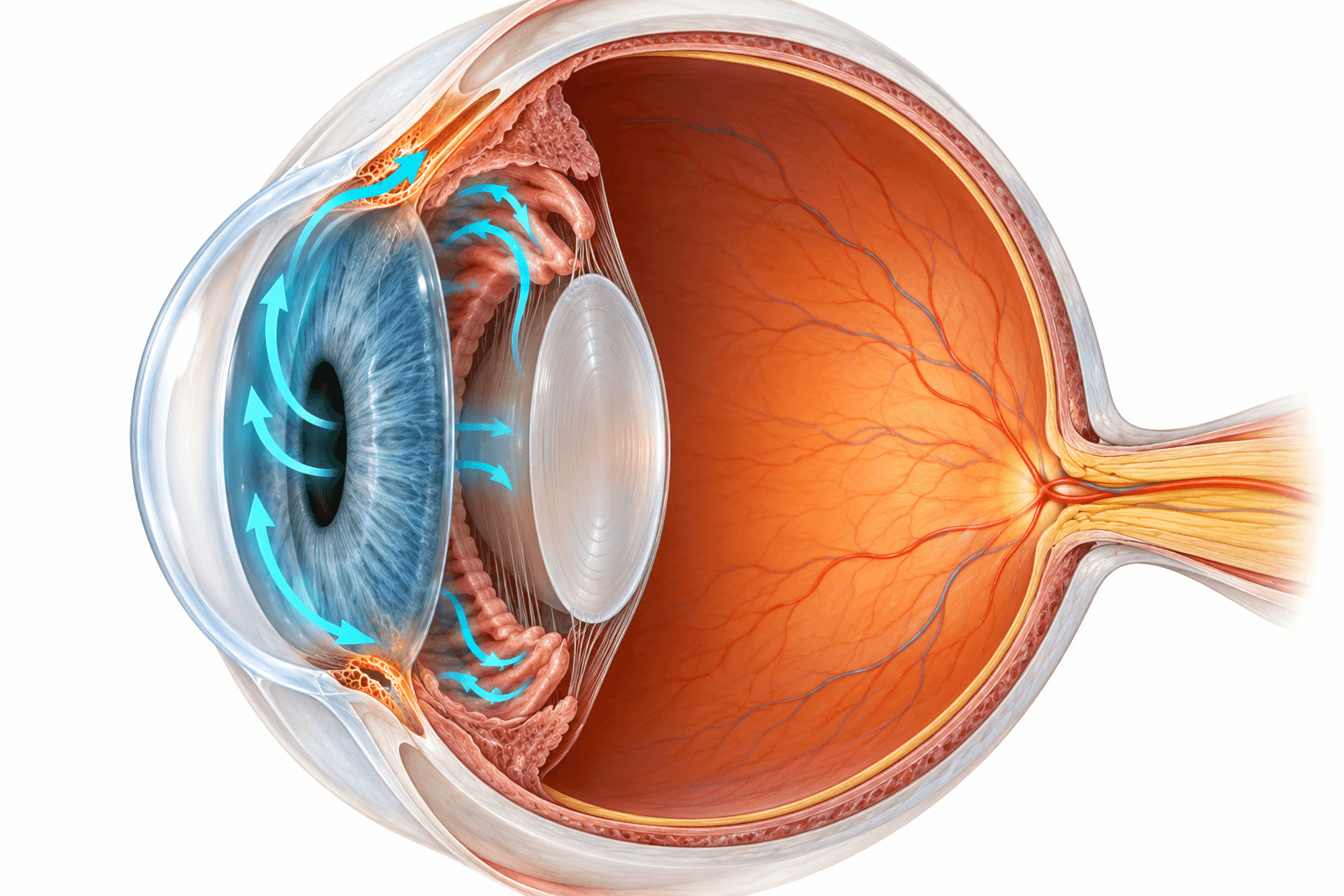
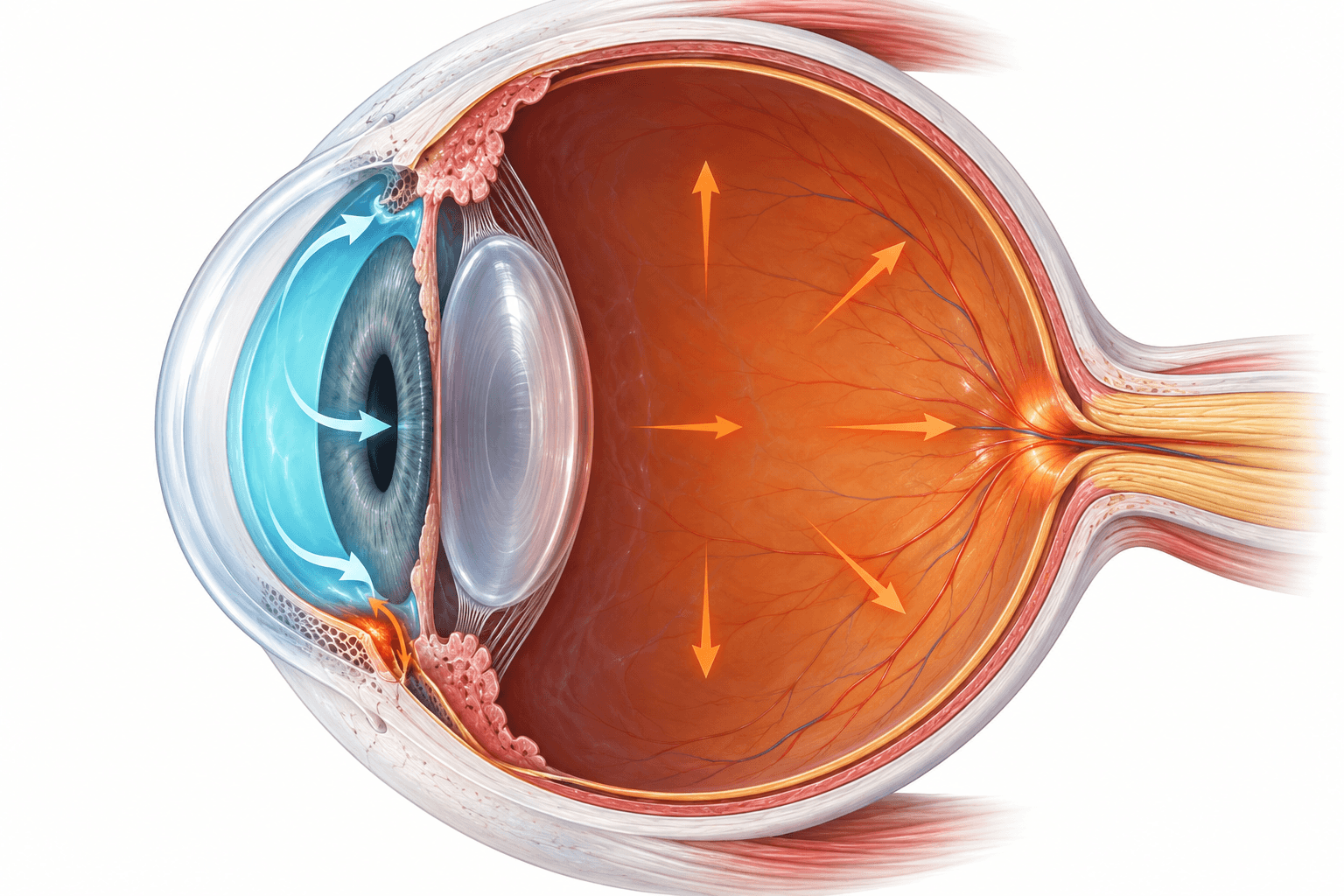
How fluid drains, and how pressure can rise
Compare normal drainage with slowed drainage to see one common way pressure can rise inside the eye.
Drains normally
Drainage slowed
Treatment
How glaucoma is treated
Treatment aims to lower the pressure in the eye and protect the vision that is left. It cannot bring back vision that has already been lost.
Eye drops
Often the first step. Drops lower the pressure in the eye, and they only work when they are used regularly as prescribed.
Laser treatment
In suitable eyes, a laser can help fluid drain more easily or open a narrow drainage angle.
Surgery
When drops or laser are not enough, surgery creates a new route for fluid to leave the eye. Options range from minimally invasive glaucoma surgery (MIGS) to conventional operations.
The choice depends on the type of glaucoma, how far it has gone and the person’s health. The doctor explains the options and what each can and cannot do. Check-ups continue after treatment, because glaucoma needs watching over the long term.
See it explained
How glaucoma can narrow side vision
The change is usually gradual, which is why regular examinations matter.

The whole scene is in view, including its edges.
Vision lost to glaucoma does not come back, and early on most people notice nothing. Regular examination is how it is found, and how any change is caught.
Know the signs
Who should have regular eye checks
- Anyone with a close relative who has glaucoma
- People over 40, because the risk rises with age
- People who are very short-sighted
- People with diabetes or high blood pressure
- People who have been told their eye pressure is high
- People who use steroid medicines over a long period, as advised by their doctor
- People who have had an injury to the eye
Sudden eye pain with redness, halos around lights, headache or sickness needs urgent medical attention.
What to expect
What an assessment involves
A general outline of long-term care. The doctor decides which tests you need and how often.
Examination
Your eyes are examined, including the optic nerve at the back of the eye.
Tests chosen by the doctor
Tests may measure the pressure in the eye and the field of vision. Which tests are needed is the doctor's decision.
Findings and plan
The doctor explains what was found, whether treatment is needed and what it aims to do.
Treatment, where needed
Glaucoma can be treated with eye drops, laser or surgery. If any of these is suitable, the doctor explains the choices.
Regular follow-up
Glaucoma needs monitoring over the long term, so check-ups continue as the doctor advises.
Watch
Videos on this topic
Dr. Poonam Jain's centre shares short videos on its YouTube channel and in its own footage.
Videos are general information, not a substitute for an examination. They complement the written information on this page.
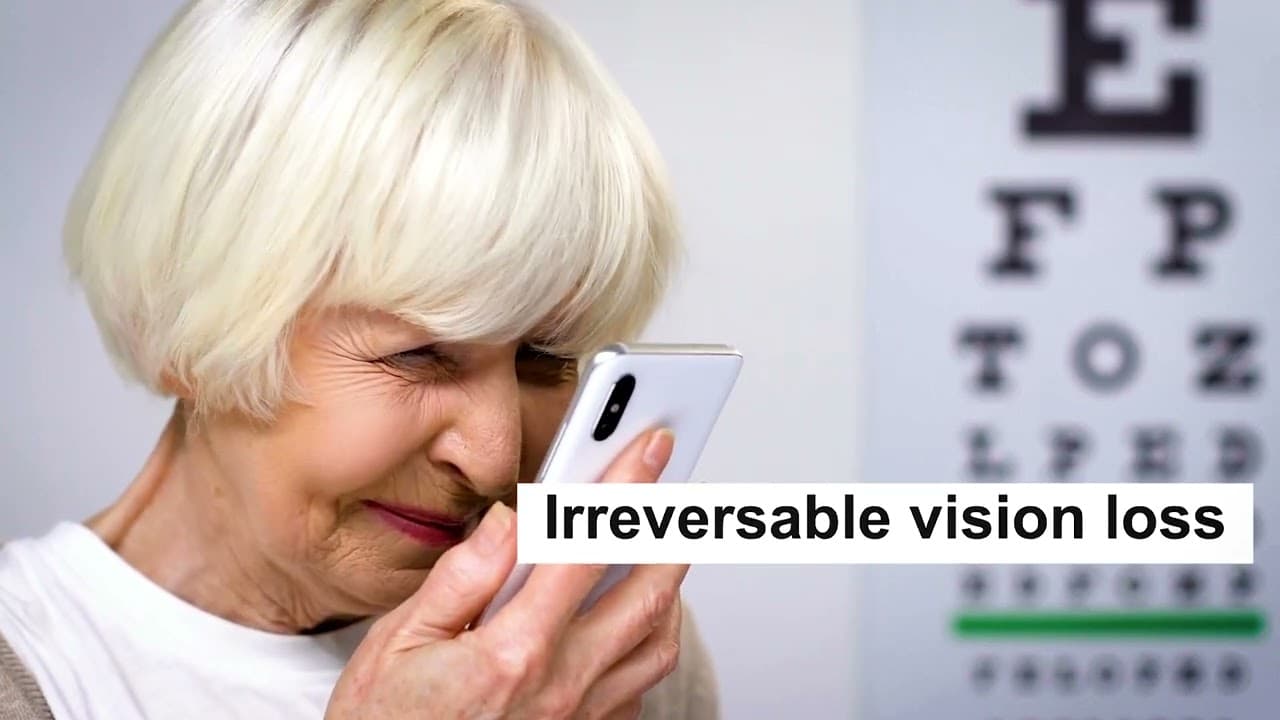
Pressing play loads YouTube's player (privacy-enhanced mode). Watch on YouTube (opens in a new tab)
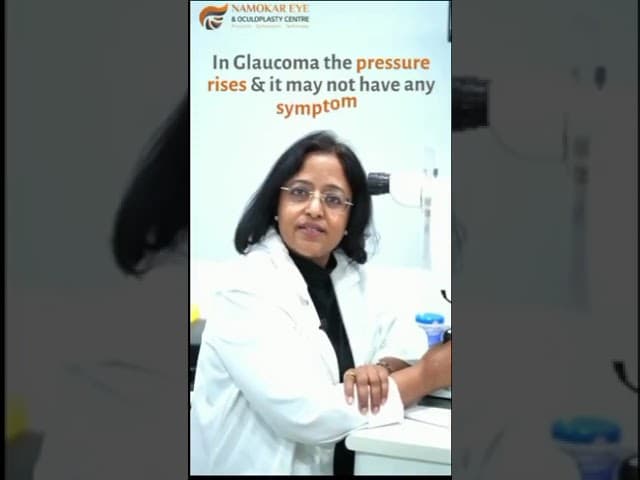
Pressing play loads YouTube's player (privacy-enhanced mode). Watch on YouTube (opens in a new tab)
Common questions
Questions patients often ask
This page is general information, not medical advice. Your own eyes need to be examined before anyone can advise you.
Can glaucoma be cured?
Glaucoma is usually managed long term rather than cured. Treatment aims to slow or stop further damage to the optic nerve.
Can I have glaucoma with normal eye pressure?
Yes. Some people develop optic nerve damage even when the pressure measures in the normal range, which is one reason a full examination is needed.
Do I have to keep coming back?
Usually, yes. Glaucoma can change over time without symptoms, so regular follow-up is part of care. The doctor tells you how often.
Does glaucoma run in families?
Having a close relative with glaucoma raises your own risk, so tell the doctor if someone in your family has it.
Why is glaucoma called the silent thief of sight?
Because it can reduce side vision slowly, with no pain and no obvious warning. Many people only notice once a good deal of vision has gone, which is why examination matters before symptoms appear.
What are the early symptoms?
The common open-angle type usually has none early on. Angle-closure glaucoma can come on suddenly with severe eye pain, blurred vision, halos around lights, headache or sickness, and that needs urgent medical attention.
Who is at higher risk?
People over 40, those with a close relative who has glaucoma, people with diabetes or high blood pressure, high eye pressure, high short-sightedness, long-term steroid use or a past eye injury. Having a risk factor does not mean you will develop glaucoma.
How is glaucoma diagnosed?
The doctor examines the optic nerve and may check eye pressure, the field of vision, the drainage angle, corneal thickness and use a scan of the nerve. Which tests are needed is the doctor's decision.
What treatments are there?
Eye drops, laser treatment or surgery, depending on the type of glaucoma and how far it has gone. Treatment aims to protect the vision you still have. It cannot restore vision already lost.
How often are follow-up visits needed?
It depends on the type of glaucoma, how far it has gone and how well it is controlled. The doctor sets a schedule for you and changes it if anything changes.
When should I see an eye specialist?
If you have a family history, have been told your eye pressure is high, notice your side vision narrowing, or have not had your eyes checked for some time. Sudden severe eye pain, blurred vision, halos or sickness need urgent attention.
Speak to the centre about your eyes.
Contact the centre to plan your visit or arrange an eye consultation.
MIG Flats, Pocket C, near Satyawati College, Opposite Madrina Restaurant, Pocket A, Phase 3, Ashok Vihar, Delhi 110052